TL;DR
- IT now shapes client trust, firm reputation, and operational continuity, not just whether systems stay online.
- Modern managed IT services for accounting firms cover device management, access controls, compliance, and security training, far beyond break-fix support.
- The outsourcing calculation tips once firms add remote or offshore teams, multiple software platforms, or enough complexity for one IT person to manage alone.
- Before comparing providers, assess your risk profile, access structure, and compliance obligations so you can evaluate against your actual needs.
The Internal Revenue Service (IRS) requires all tax and accounting professionals to maintain a formal Written Information Security Plan (WISP). The Federal Trade Commission’s (FTC) updated Safeguards Rule adds additional requirements: encryption, multi-factor authentication, formal risk assessments, and a designated security coordinator.
Most accounting firms know these requirements exist, but haven’t built an IT structure that actually satisfies them.
If you are a firm leader evaluating your technology strategy or considering what the right managed IT services partner should look like, this article walks through how the expectations have shifted, how to run the build-versus-buy decision honestly, and what to look for in a partner suited to the firm you are building.
Accounting Firms Have Outgrown Traditional IT Support
Technology now sits at the center of how accounting firms deliver client work, retain staff, and manage risk. When a client shares payroll records, tax filings, or banking credentials, they are trusting you to protect that data. Every year, more of that trust depends on your IT systems than on your intent.
Most accounting firms still treat IT as a support function: something you call when a laptop stops working, or a password needs resetting. That model made sense when firms were smaller and systems simpler. It does not hold up against the current threat environment or the compliance obligations that now apply to practices of nearly every size.
Downtime costs you client work, a compromised device exposes financial data you were hired to protect, and a breach erodes the client trust that took years to build.
The accounting firms managing these data security risks well are not the ones with the largest IT budgets, but those that recognized IT as a strategic function early enough to build the right structure before something forced their hand.
Why Have Managed IT Services Changed?
Ten years ago, managed IT for a small accounting firm meant calling someone when something broke to fix the server, recover the file, or reset the password. The scope is entirely different today.
A modern managed IT provider serving accounting firms covers device management, access controls, compliance guidance, business continuity planning, and ongoing security training as standard. That shift happened because the threat environment changed, and because the integrated accounting systems that accounting firms depend on have grown far more complex.
As teams grow, more people naturally gain access to files, creating a need for strict oversight to ensure that everyone with access has a legitimate business need and to minimize unnecessary risk.
Every additional person with access to your cloud accounting technology, client files, or practice management software is a potential exposure point. Managed IT that includes active access reviews, user provisioning and de-provisioning, and least-privilege controls is meaningfully different from IT that only responds to support tickets.
Device security carries its own blind spot. One of the most reliable assumptions is that Macs are inherently safe. That’s not the case.
Modern accounting IT services include endpoint detection and response across every device, regardless of operating system or location. What accounting firms need from a managed IT partner today is someone who builds the systems that prevent problems, not someone dispatched after they occur.
Why Are More Accounting Firms Outsourcing IT?
The build-versus-buy question comes down to scope and realistic coverage. You can hire an internal IT person or partner with a managed services provider, but the options look different once you model what each actually delivers.
A single internal IT hire gives you one person’s expertise, available during their working hours, at a fully loaded annual cost well above the base salary. According to the U.S. Bureau of Labor Statistics, the median annual salary for a network and computer systems administrator is approximately $97,000.
Add benefits, tools, training, and turnover risk, and the true cost climbs substantially. One generalist cannot realistically cover endpoint security, access management, compliance advisory, phishing training, help desk coverage, and the outsourced financial management of your technology stack simultaneously.
Most firms that try the single-hire model don’t discover the coverage gaps until a security incident or compliance review forces the issue.
A managed IT provider provides a team of specialists at a predictable monthly cost that scales with your headcount and device count. You are not paying for depth you do not need yet, and you are not exposed when your IT person takes time off or resigns mid-project.
For growing accounting firms, the calculus typically tips toward outsourcing once complexity crosses a threshold. Remote team members, offshore staff, multiple cloud platforms, and rapid growth all add to IT demands faster than one person can track.
Before You Evaluate Providers, Evaluate Your Firm
Most firms approach an IT provider search the way they approach any vendor decision: gather quotes, compare pricing, and choose the best rate. That approach tends to surface the provider best suited for a generic firm, not yours.
Before you evaluate any managed IT partner, get an honest picture of where your firm actually stands.
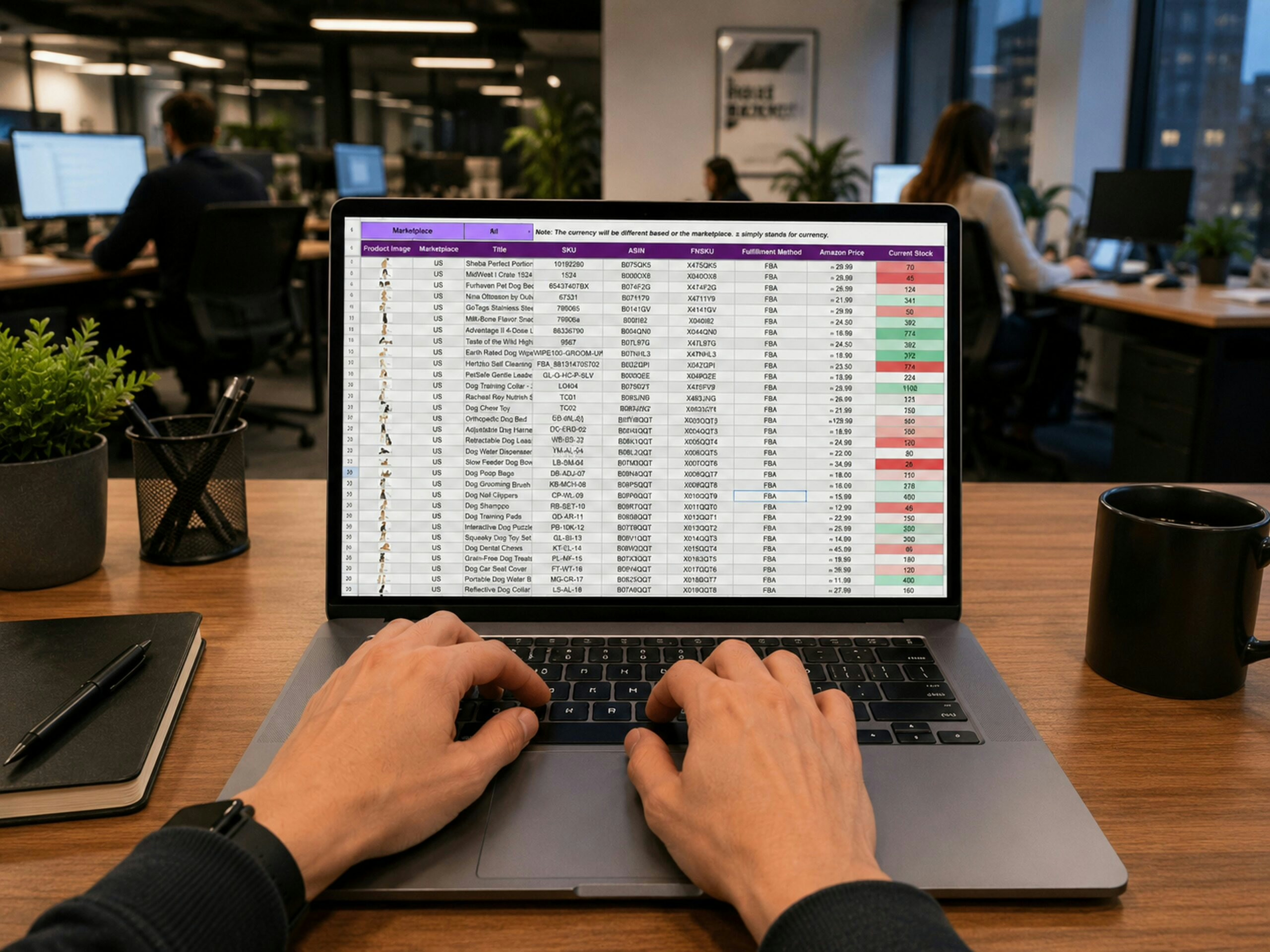
Start with your device inventory. Can you name every device with access to your client files and financial operations? Most firms cannot.
Then work through your access picture. Who has current access to your cloud accounting technology, practice management software, file storage, and payroll platforms? Former team members whose accounts were never offboarded represent an open door into client data.
Map your compliance obligations. If you prepare tax returns, a WISP is legally required. If you have offshore team members, cross-border data handling adds further considerations. Identify which systems your financial reporting depends on, and what happens operationally if any one of them fails.
Once you have answered these questions, you can match providers to your actual risk profile instead of a generic feature checklist. The right partner for your firm is the one who can address your specific gaps, not the one with the most polished proposal deck.
Build an IT Strategy That Supports the Firm You’re Becoming
The firms that handle IT well share a common trait: not the largest IT budget or a dedicated internal team, but a clearly designated owner of the IT function.
The most successful firms are highly organized and maintain a clear technology leader or designated point person responsible for IT, even if that individual is not a full-time technology employee.
That ownership changes the relationship with a managed IT partner entirely. Instead of reactive calls when things break, there is an ongoing working relationship with context, history, and a shared picture of where the firm is headed. The IT partner knows when new offshore team members are added, when a new software platform is under evaluation, and whether a given cloud tool’s data practices pose a risk to client financial data.
For accounting firms building toward sustainable scale or a future exit, IT strategy and financial leadership have to move together. Technology decisions made in coordination with your growth objectives and long-term goals produce better outcomes than decisions made under pressure after an incident.
Nimbl Tech was built from this exact experience. When Nimbl’s own accounting firm could not find an IT partner that understood their environment, they built one. That firsthand experience shapes how Nimbl Tech approaches managed IT for accounting firms, eCommerce businesses, and other clients managing sensitive financial data across distributed teams.
Pairing strategic finance leadership with IT infrastructure that supports where you are headed is what separates firms that scale cleanly from firms that find out what they missed during a security incident, a compliance audit, or an acquisition process.
Schedule an IT Roadmap Review
Your technology strategy either supports the firm you are building or drags it down. If you are not sure which, an honest IT assessment is the right place to start.
Schedule an IT roadmap review with the Nimbl Tech team to assess whether your current setup aligns with your firm’s growth, security requirements, and long-term goals.
FAQs
How Can Accounting Firms Tell Whether Their Technology Challenges Are Operational Problems or IT Problems?
Recurring issues after fixes, slow systems affecting client delivery, staff uncertainty about who manages access to which files, and devices with client data that no one formally tracks are signs of an IT structure gap, not an operational one. If the same problems resurface after each attempt to resolve them, you need a more systematic approach to IT.
What Technology Risks Create the Biggest Liability for Accounting Firms Handling Sensitive Client Financial Data?
Access management failures and unprotected devices carry the highest liability. A former team member with active access to client files, or a compromised device that exposes financial data, can trigger IRS and FTC compliance penalties, client losses, and remediation costs for identity theft for affected individuals. Phishing remains the most common entry point for both categories of risk.
At What Point Does an Accounting Firm Outgrow a Single Internal IT Person or General IT Support Provider?
The inflection point typically arrives when a firm adds remote or offshore team members, reaches five or more software systems managing client data, or grows to a size where one person cannot realistically cover device security, access management, compliance, and help desk support simultaneously. Most firms have already crossed that line before they recognize the coverage gap.
How Should Accounting Firms Evaluate the Long-Term Cost of Managing IT In-House Versus Partnering With a Managed Services Provider?
Compare the fully loaded cost of one internal IT hire (salary, benefits, tools, training, and turnover risk) against a managed IT provider’s monthly fee, then compare the actual scope of coverage. One generalist rarely covers the range of device management, compliance guidance, access administration, and security training that a managed IT team delivers for a comparable annual investment.
What Role Should Technology Planning Play in an Accounting Firm’s Growth, Hiring, and Succession Strategy?
Technology planning should run in parallel with every significant headcount or systems change. Adding offshore staff, onboarding new accounting software, or preparing for a future exit all carry IT implications that, if unaddressed, surface as security gaps or compliance failures at the wrong moment. Firms with a clear IT roadmap can manage those transitions on their own terms. Nimbl Tech’s IT Security Checklist helps you build one.